








The British Royal Family is admired, scrutinised, and endlessly discussed—but behind the ceremonial glamour lies a world shaped by ancient laws and traditions that most people never encounter in their lifetime. Some royal privileges are symbolic; others are surprisingly powerful. All of them reveal just how different royal life is from ordinary British life.
From owning wild swans to travelling without passports, these privileges may sound outrageous, but each is rooted in centuries of constitutional development. This expanded, richly detailed guide explores seven of the most extraordinary royal allowances, explaining their origins, purpose, and place in modern Britain.
Introduction
The British monarchy’s enduring influence comes not from political power, but from its unique blend of history, symbolism, and constitutional tradition. Over the centuries, kings and queens passed down privileges that reflected their authority and status. Although Britain is now a parliamentary democracy, many of those privileges remain embedded in the legal framework and cultural identity of the nation.
These customs can seem strange to the modern eye, particularly in a world that values transparency, equality, and legal consistency. Yet the monarchy thrives precisely because it preserves traditions that tie contemporary Britain to its past. Royal privileges serve as reminders of how governance once operated, how society viewed authority, and how symbols continue to shape public life.
This expanded article looks at seven of the most remarkable, unusual, and historically significant privileges the Royal Family enjoys. Each section explains not only what the privilege is, but why it exists, how it has evolved over time, and what it means for the monarchy today.
1. The Monarch Has Full Legal Immunity
Legal immunity is perhaps the most astonishing royal privilege. The reigning monarch cannot be prosecuted or taken to court under civil or criminal law. This principle—“the sovereign can do no wrong”—has existed for centuries.
Why the Monarch Cannot Be Prosecuted
Originally, the monarch was the ultimate source of justice. Courts operated in the monarch’s name, so early legal systems determined it was impossible for the Crown to be legally wrong. This was not designed to place monarchs above the law, but to prevent contradictions within the justice system.
How Legal Immunity Works Today
- The King cannot be arrested or charged regardless of circumstances.
- The King cannot be sued, subpoenaed, or legally compelled.
- Legal immunity applies for the duration of the reign.
Yet modern monarchs follow the law voluntarily, guided by tradition, ethics, public expectation, and constitutional advisers.
Why the Privilege Has Not Been Removed
Removing sovereign immunity would:
- Undermine the foundational structure of the UK’s legal system
- Blur the separation of constitutional powers
- Risk politicising the monarchy
Thus, immunity remains a symbolic safeguard for stability rather than a personal benefit for the monarch.
2. The Monarch Does Not Need a Passport
One of the strangest royal privileges is that the King never carries a passport. All British passports are issued under His Majesty’s authority, which makes it unnecessary—and legally impossible—for the monarch to issue one to himself.
Why This Rule Exists
Passports historically served as letters of introduction from one monarch to another, granting safe passage. As the issuer, the King cannot request his own signature of permission.
How Royal Travel Works
The monarch’s identity is verified through:
- Diplomatic notifications
- Government-to-government communication
- Security protocols arranged months in advance
Royal travel is a national security operation handled by the Foreign Office, Home Office, and international authorities.
What About Other Royals?
Other members of the Royal Family:
- Must carry passports
- Receive diplomatic support at borders
- Travel under enhanced international security procedures
The monarch remains the only British citizen exempt.
3. The Monarch May Legally Drive Without a Licence
Another unusual privilege stems from the monarch’s historical role as legislator. Because driving licences are issued through the authority of the Crown, the monarch was never required to obtain one.
What This Means Today
- The King can drive without a licence.
- He does not need to take a theory or practical driving test.
- He may legally operate a vehicle even in public settings.
Historical Context
Before motor vehicles existed, royal authority governed all transportation systems. When cars emerged, the law simply extended existing royal exemption rather than altering centuries of legal structure.
How Monarchs Practise This Privilege
While theoretically powerful, the privilege is used sparingly:
- Monarchs occasionally drive on private estates such as Sandringham or Balmoral.
- Public driving is usually avoided due to security and visibility concerns.
Symbolism Behind the Law
The exemption reflects continuity—preserving the tradition that the monarch is not subject to regulations created in their own name.
4. Royals Own All Unmarked Swans and Certain Marine Animals
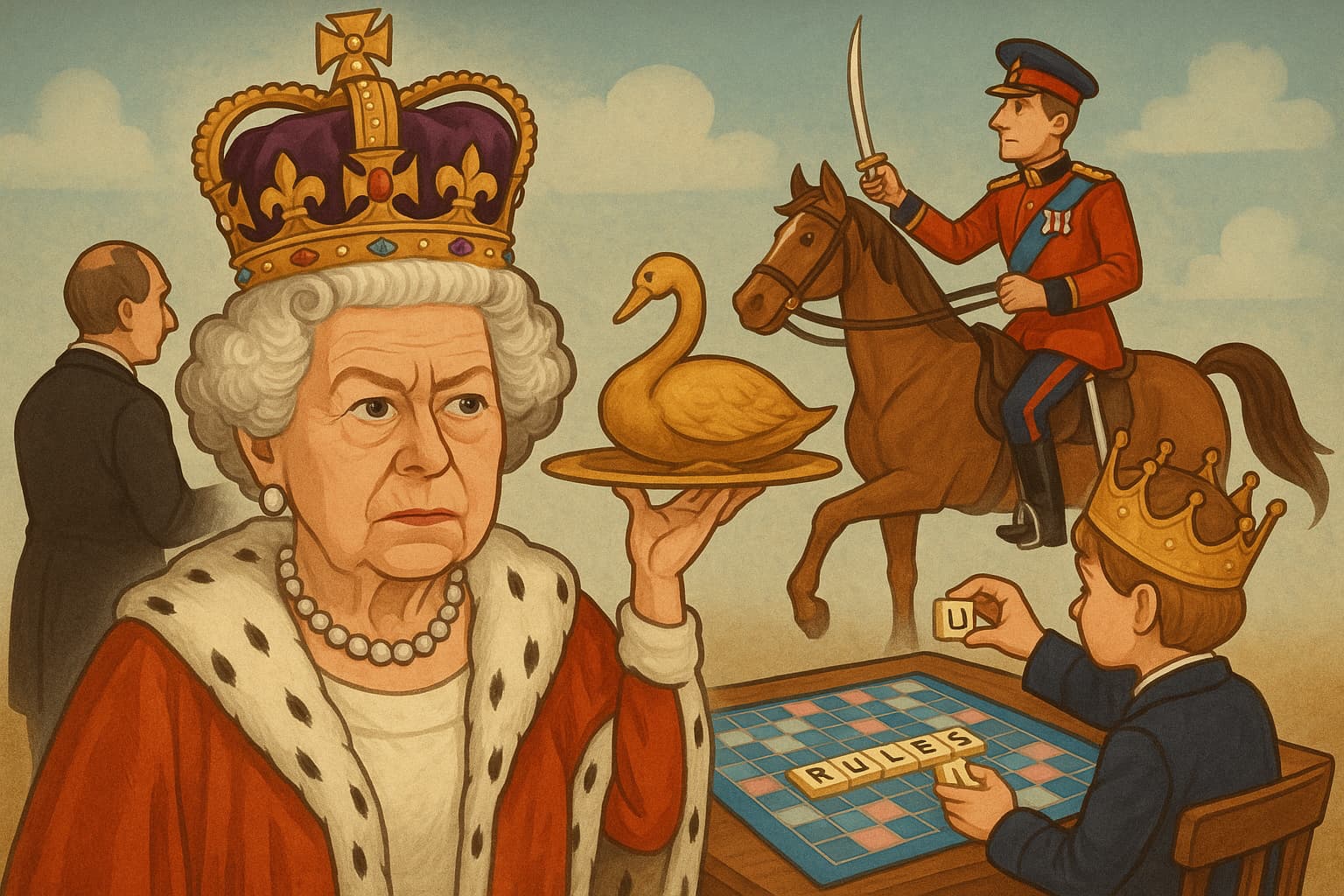
Few royal privileges capture the public imagination like the ownership of wildlife. By law, the Crown owns:
- Unmarked mute swans in open British waters
- Whales, sturgeon, and dolphins captured or stranded near UK shores
Why These Animals Were Claimed
Historically:
- Swans symbolised luxury, purity, and nobility.
- They were consumed at royal feasts and reserved for elite households.
- Large marine animals were economically valuable sources of oil, bone, and meat.
Royal ownership ensured control of valuable resources.
Swan Upping: A Living Tradition
Every July, the Thames hosts Swan Upping, a ceremonial count of swans. Crews from the Crown and the Worshipful Companies of Vintners and Dyers:
- Capture swans humanely
- Check their health
- Mark ownership
- Monitor population numbers
This ceremony blends heritage, wildlife conservation, and national identity.
Royal Fish
Whales, dolphins, and sturgeon—classified as “royal fish”—automatically belong to the monarch if caught within three miles of the coastline. This rule now serves mainly symbolic and conservation purposes.
5. The Monarch Celebrates Two Birthdays
One of the monarchy’s most charming traditions is the double birthday. The sovereign has:
- A private birthday (actual date of birth)
- An official birthday (public celebration held in June)
Why Two Birthdays?
The tradition began when King George II, born in November, desired a public celebration during more pleasant weather. Later monarchs adopted the practice for consistency.
Trooping the Colour
The official birthday includes:
- A grand military parade
- The Horse Guards Parade
- Flypasts and balcony appearances
- Thousands of spectators
It is one of Britain’s most iconic annual ceremonies.
Private Celebrations
The real birthday is usually low-key, marked with:
- Family gatherings
- Private meals
- Religious services
- Quiet reflection
Purpose of the Tradition
Two birthdays:
- Maintain continuity across reigns
- Strengthen public engagement
- Reinforce ceremonial tradition
- Ensure national celebrations aren’t affected by unpredictable weather
6. Royal Finances Are Not Fully Disclosed to the Public
Royal finances remain among the most complex subjects in the UK, blending public funding, private wealth, inherited estates, and constitutional assets.
Sources of Royal Funding
- Sovereign Grant (public funds for official duties)
- Duchy of Lancaster (monarch’s private income)
- Duchy of Cornwall (heir’s income)
- Personal investments and properties
Why Transparency Is Limited
Complete disclosure is avoided because:
- It may compromise national security
- It could expose sensitive information about royal residences
- It may blur public vs private asset classification
- The monarchy must remain politically neutral and financially independent
What Information Is Made Public
Annual reports detail:
- Spending on travel, staff, and property maintenance
- Official engagements
- Estate revenues and contributions
But detailed personal wealth remains confidential.
Ongoing Debate
Supporters argue confidentiality protects the monarchy’s independence. Critics argue that public contributions warrant greater transparency. The balance remains a long-standing constitutional compromise.
7. The Royal Household Is Exempt from Freedom of Information Laws
Freedom of Information (FOI) laws enable the public to access government records. However, the Royal Household is legally exempt.
What Cannot Be Requested
- Internal royal correspondence
- Private financial details
- Planning documents for royal events
- Letters exchanged with government ministers
- Administrative records
Reasons for Exemption
The exemption exists to:
- Protect the monarchy’s political neutrality
- Prevent misinterpretation of confidential advice
- Ensure security protocols remain undisclosed
- Maintain diplomatic relationships
- Preserve the monarch’s role as a non-political head of state
Controversy and Support
Critics argue the exemption reduces transparency. Supporters counter that it is essential for national stability and ensures the monarchy cannot be drawn into political disputes.
Table: Overview of Outrageous Royal Privileges
| Privilege | What It Allows | Why It Exists |
|---|---|---|
| Legal Immunity | Monarch cannot be prosecuted | Symbolic constitutional stability |
| No Passport Required | Monarch travels without identification | Passports issued in their name |
| No Driving Licence | Monarch may drive without tests | Historical authority of the Crown |
| Ownership of Wildlife | Claims over swans, whales, dolphins, sturgeon | Medieval economic and symbolic rights |
| Two Birthdays | Public and private celebrations | Weather and public engagement tradition |
| Financial Privacy | Limited public disclosure | Security and neutrality |
| FOI Exemption | Royal documents kept confidential | Protects impartiality and security |
FAQs
1. Why does the monarch have legal immunity?
The monarch’s legal immunity is rooted in the ancient principle that the sovereign is the source of justice. Modern monarchs do not exercise personal power, but the legal protection remains to preserve constitutional structure. It ensures courts cannot challenge or interfere with the monarch’s position. Although immune from prosecution, the monarch’s role is symbolic, and actions are carried out on ministerial advice, ensuring they remain within legal and ethical boundaries in practice.
2. Do other members of the Royal Family have immunity?
Only the reigning monarch has full legal immunity. Other members of the Royal Family can face legal action and are subject to the same laws as everyone else. They may receive enhanced security, diplomatic assistance, or protocol-based support, but they do not enjoy absolute legal protection. If a royal were to ascend the throne, only then would they gain sovereign immunity. This distinction preserves constitutional clarity and prevents personal misuse of royal privileges.
3. Why does the King not need a passport?
The King does not need a passport because passports are issued in his name, making it impossible for him to issue one to himself. Instead, royal travel is coordinated through diplomatic channels with advance approval from foreign governments. Security teams handle verification, ensuring identity is never questioned. Other royals still require passports, but benefit from expedited processing. This exemption is symbolic and reflects the monarch’s position as the issuer of official state documents.
4. What happens during Swan Upping?
Swan Upping is an annual ceremony on the Thames where swans are rounded up, counted, checked for injuries, and assigned ownership markings. The event, deeply rooted in medieval tradition, originally existed to enforce royal rights over swans. Today, it serves more as a conservation activity, helping monitor swan populations and protect the species. The ceremony blends heritage, environmental stewardship, and cultural symbolism, maintaining a centuries-old practice in a modern ecological context.
5. Why does the monarch have two birthdays?
The tradition of two birthdays began to ensure a monarch born in colder months could still enjoy a public celebration in favourable weather. The official birthday falls in June and is marked by Trooping the Colour, a major national event. The personal birthday remains a private family occasion. This arrangement provides continuity, enhances public participation, and strengthens ceremonial tradition, allowing the monarchy to maintain a consistent national celebration regardless of actual birth dates.
6. Why aren’t royal finances fully transparent?
Royal finances involve a mixture of public funding, private income, inherited estates, and assets held in trust. Full disclosure could jeopardise security, blur distinctions between state and private property, and expose sensitive information. Some financial details are released annually, but personal wealth and certain estate figures remain confidential. Supporters argue privacy preserves neutrality and safety, while critics call for more transparency. The balance reflects the monarchy’s unique constitutional and historical position.
7. Why is the Royal Household exempt from FOI laws?
The Royal Household’s exemption from FOI laws protects the monarchy’s neutrality and ensures sensitive communications remain confidential. Releasing internal documents could reveal political opinions or influence, undermining the monarch’s impartial role. The exemption also safeguards personal security, diplomatic relations, and operational planning. While it limits public access to royal information, it preserves a separation between the monarchy and government institutions, ensuring the Crown remains above political conflict and administrative scrutiny.
Conclusion
The British monarchy is uniquely shaped by centuries of tradition. While many privileges may seem extravagant or outdated, each one grew from historical necessity, legal evolution, or symbolic custom. These unusual allowances not only illuminate how the monarchy once governed the country but also show why it continues to hold a distinctive place in modern Britain.
These privileges contribute to the monarchy’s mystique. They stand as reminders that the Royal Family is not only a public institution but also a living connection to Britain’s past. Whether seen as charming traditions or controversial exceptions, they offer a rare insight into the blend of history, ceremony, and constitutional structure that defines the British Royal Family today.