









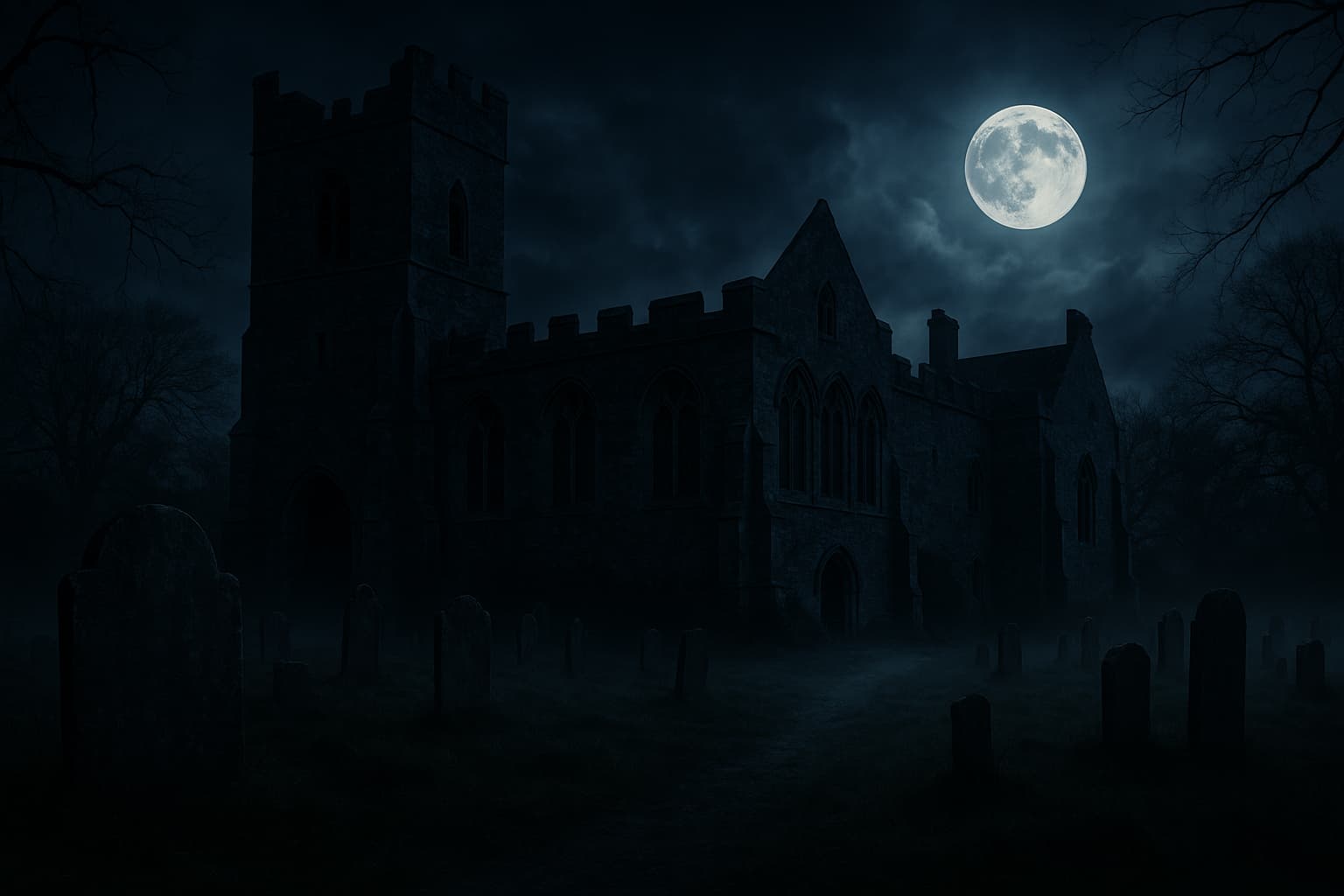
Fog-shrouded castles, decaying abbeys on windswept cliffs, sleepy villages where the pub talk is more about ghosts than gossip – England is full of places where the past feels unnervingly close. These are not just pretty backdrops for photographs. They are settings for executions, witch trials, betrayals, and unexplained deaths, with stories that refuse to fade.
Whether you are planning a ghost-hunting road trip or simply love a good shiver down the spine, this guide brings together twenty of England’s most notorious haunted locations. From royal fortresses to rural inns, cemeteries to theatres, you will find history, legend, and modern eyewitness accounts in one place – so you can decide for yourself where you dare to visit after dark.
Introduction: England’s Long Shadow of Ghost Stories
England’s landscape is layered with more than a thousand years of recorded history. Castles guarded royal intrigues, abbeys witnessed upheaval and dissolution, and country manors saw family feuds stretch across generations. In many of these places, people died violently or in great distress – executed on suspicion of treason, condemned as witches, murdered for inheritance, or lost to war and plague. It is hardly surprising that locals began to believe that some of these souls never truly left.
Over centuries, stories of apparitions, strange sounds and inexplicable events were passed from one generation to another. In the Victorian period, the cult of spiritualism and a taste for gothic horror helped to fix many of these tales in popular imagination. Today, some sites actively embrace their haunted reputations, offering ghost tours and overnight investigations. Others prefer to focus on conventional heritage, while quietly acknowledging that visitors and staff still report unsettling experiences in certain rooms and corridors.
This lengthy guide gathers twenty of the most talked-about haunted places in England. For each one, you will find a concise history, key legends, reported paranormal activity and practical notes for visitors.
Overview Table: 20 Haunted Places in England
| # | Haunted Place | County / Region | Type of Site | Headline Haunting |
|---|---|---|---|---|
| 1 | Tower of London | Greater London | Fortress, former prison | Royal ghosts, murdered princes, executed queens |
| 2 | Hampton Court Palace | Greater London (Richmond) | Royal palace | Tudor queens, unexplained screams and footsteps |
| 3 | Blickling Hall | Norfolk | Stately home | Anne Boleyn’s ghost in a headless carriage |
| 4 | Raynham Hall | Norfolk | Country house | The famous “Brown Lady” staircase apparition |
| 5 | Berry Pomeroy Castle | Devon | Castle ruins | White Lady and Blue Lady luring visitors |
| 6 | Buckland Abbey | Devon | Former abbey, manor | Sir Francis Drake and phantom hounds |
| 7 | Pendle Hill | Lancashire | Moorland landscape | Spirits of accused witches from 1612 trials |
| 8 | Pluckley Village | Kent | Rural village | “England’s most haunted village” – numerous ghosts |
| 9 | Chillingham Castle | Northumberland | Medieval castle | Blue Boy and tortured souls in dungeons |
| 10 | Woodchester Mansion | Gloucestershire | Unfinished mansion | Floating heads, dark figures, hostile presence |
| 11 | Ancient Ram Inn | Gloucestershire | Former inn / house | Witch, child sacrifices, demonic presence |
| 12 | Littledean Hall | Gloucestershire | Historic house | Multiple apparitions, haunted cellar |
| 13 | Wymering Manor | Hampshire | Manor house | Whispering children, moving furniture, cold spots |
| 14 | Hinton Ampner | Hampshire | Country house | Groans, banging, figures in gardens and cellars |
| 15 | Beaulieu Abbey & Palace House | Hampshire (New Forest) | Abbey ruins, house | Ghostly monks, nuns and river apparitions |
| 16 | Theatre Royal Drury Lane | London (West End) | Theatre | “Man in Grey” and spectral performers |
| 17 | 50 Berkeley Square | London (Mayfair) | Townhouse | Terrifying attic entity, Victorian suicide legend |
| 18 | Highgate Cemetery | London | Victorian cemetery | Highgate “vampire”, cloaked figures with red eyes |
| 19 | Whitby Abbey | North Yorkshire | Abbey ruins | Phantom nun, ghostly lights on the headland |
| 20 | Corfe Castle | Dorset | Castle ruins | Headless woman in white on the battlements |
1. Tower of London – Royal Prison of Restless Spirits
History in Brief
The Tower of London was founded by William the Conqueror in the late 11th century as a fortress and royal residence. Over time it became one of England’s most feared prisons, housing traitors, political rivals and unfortunate royals awaiting execution. Beheadings on Tower Green, mysterious disappearances and brutal interrogations have left an indelible mark on its reputation.
Famous Ghosts and Legends
The Tower’s ghost-list reads like a Tudor history book:
- Anne Boleyn, second wife of Henry VIII, is said to walk near the site of her execution and in the Chapel of St Peter ad Vincula, sometimes carrying her severed head.
- The Princes in the Tower, Edward V and his brother Richard, allegedly murdered in the 1480s, are believed to appear as pale children in white nightgowns, holding hands near the Bloody Tower.
- Another recurring figure is Lady Jane Grey, the “Nine Days’ Queen”, whose short and tragic reign ended with her execution at the Tower.
Visitors and Yeoman Warders report unexplained scents of perfume, sudden chills, and glimpses of figures vanishing around corners.
Paranormal Activity Today
Modern accounts mention cold spots in the Salt Tower, phantom soldiers on the battlements and disembodied screams near Traitors’ Gate. Some staff members have worked there for decades and insist they have seen or heard things that defy rational explanation. Ghost tours and evening events make use of these tales, but many experiences occur when no visitors are present.
Visiting Tips
The Tower is run by Historic Royal Palaces and is open year-round. Guided tours with Beefeaters provide both historical detail and ghost stories. For a more atmospheric experience, visit in winter or late afternoon when the crowds thin and the river mist begins to rise.
2. Hampton Court Palace – Haunted Corridors of the Tudors
History in Brief
Hampton Court Palace was once a favourite residence of Henry VIII. It later hosted monarchs like William III and Mary II. The palace witnessed royal births, political scheming and the downfall of those who lost favour. Several of Henry’s wives stayed here – and a couple never truly left, according to legend.
Ghosts of Queens and Servants
Two stories dominate:
- Catherine Howard, Henry VIII’s fifth wife, supposedly runs screaming down the so-called “Haunted Gallery”, re-enacting her desperate attempt to reach the king and plead for mercy after accusations of adultery. Staff and visitors have reported a sudden chill, a feeling of terror, or the faint sound of a woman screaming.
- Jane Seymour, Henry’s third wife, is believed to appear holding a candle near the Clock Court stairs where she once walked while pregnant. Some visitors claim to see a pale figure in Tudor dress gliding silently at dusk.
Servants and guards from later periods are occasionally seen as fleeting shadows, heard as heavy footsteps or sensed as an unseen presence standing uncomfortably close.
Modern Sightings
CCTV footage once captured mysterious doors flinging open with no visible cause. Guides speak of cold patches and a sense of being watched in otherwise empty rooms. Ghost tours and after-hours events allow visitors to explore with the lights low and the atmosphere heightened.
Visiting Tips
Located in Richmond upon Thames, Hampton Court is easily reached from central London. Audio tours and costumed interpreters focus on Tudor and Baroque history, but you can also join seasonal ghost walks that highlight the palace’s darker side.
3. Blickling Hall – Anne Boleyn’s Grim Homecoming
Historic Background
Blickling Hall in Norfolk stands on the site of an earlier manor believed to be the birthplace of Anne Boleyn. The current Jacobean mansion, dating from the early 17th century, boasts lavish interiors, formal gardens and an extensive estate. Yet beneath its elegance lies a famous ghost-story.
The Headless Carriage Legend
According to long-standing local tradition, every year on 19 May (the anniversary of Anne Boleyn’s execution) a headless coachman drives a black carriage up the avenue towards the hall. Inside sits Anne’s ghost, dressed in white and clutching her severed head. The carriage, drawn by headless horses, is said to vanish when it reaches the front door.
Other apparitions include Sir Thomas Boleyn, Anne’s father, condemned to drive a spectral carriage over twelve Norfolk bridges as punishment for failing to save his daughter. Servants from past centuries, cloaked figures on staircases and unexplained footsteps are frequently mentioned.
Eyewitness Accounts
National Trust staff and visitors have reported shadowy figures in the long gallery and unexplained whispers in the library. Some speak of a heavy, oppressive atmosphere in certain rooms around the anniversary of Anne’s death. Others simply feel as though they are never entirely alone in the house.
Visiting Tips
Blickling Hall is now a National Trust property. Day visitors can explore the house, gardens and parkland; occasional evening events focus on folklore and ghost stories. Autumn and winter visits, when daylight fades early, tend to feel particularly atmospheric.
4. Raynham Hall – The Brown Lady on the Staircase
History in Brief
Raynham Hall is a grand country house in Norfolk, seat of the Townshend family since the 1620s. It is one of Britain’s most famous haunted houses because of a single, chilling photograph.
The Brown Lady Legend
The “Brown Lady” is widely believed to be the spirit of Lady Dorothy Walpole, sister of Prime Minister Sir Robert Walpole. She is said to have been forced to remain at Raynham by her jealous husband, eventually dying there under questionable circumstances in 1726. Her ghost allegedly wears a brown brocade dress and glides down the main staircase with a deathly face and hollow eyes.
In 1936, photographers from Country Life magazine captured a misty, semi-transparent figure descending the staircase – an image that became one of the world’s best-known ghost photographs. Sceptics argue it is a trick of light or deliberate fakery; believers insist it confirms decades of stories.
Ongoing Hauntings
Guests and staff have reported cold breezes, unexplained whispers and the sense of someone standing behind them on the staircase. Some describe seeing a figure at the top of the stairs which vanishes when approached. Even those who doubt ghosts often admit that certain parts of the house feel peculiarly charged.
Visiting Tips
Raynham Hall has historically opened only at limited times for tours and events. If you manage to visit, spend a quiet moment on the staircase landing and see whether you feel watched.
5. Berry Pomeroy Castle – The White Lady and the Fatal Tower
Castle History
Hidden in woodland near Totnes in Devon, Berry Pomeroy Castle was begun in the late 15th century by the Pomeroy family and later expanded by the Seymour family. It was abandoned by the 18th century and now survives as romantic ruins, managed by English Heritage.
Duel of the Lady Ghosts
Two main apparitions dominate legend:
- The White Lady, thought by some to be Margaret Pomeroy, allegedly imprisoned by a jealous sister and left to starve in a dungeon. She is said to drift through the dungeons and ramparts, radiating sorrow rather than menace.
- The Blue Lady, often associated with a Norman noblewoman or a member of the Pomeroy family, is far more sinister. She supposedly appears in a blue gown, beckoning to visitors from a high tower. Those who follow her, the story goes, could meet with misfortune or death.
Paranormal Reports
Visitors report sudden anxiety near certain towers, unexplained sobbing sounds and fleeting blue or white shapes in photographs. Some feel an overpowering urge to leave specific spots, especially in the remains of upper rooms. Ghost-hunting groups class Berry Pomeroy as one of England’s most active haunted castles.
Visiting Tips
The castle is relatively secluded; the approach road winds through woodland that already sets the mood. Arrive late in the day if you want a more eerie experience, but check closing times carefully as the site does not allow after-dark access to the general public.
6. Buckland Abbey – Sir Francis Drake’s Restless Rounds
From Abbey to Elizabethan Manor
Buckland Abbey, near Plymouth in Devon, began life as a Cistercian monastery in the 13th century. After the Dissolution of the Monasteries under Henry VIII, it passed into private hands and was eventually bought by Sir Francis Drake, the famous Elizabethan sea captain. His association with the estate lies at the heart of its haunted reputation.
Drake and the Hell Hounds
Local lore claims that Drake studied dark arts to achieve his naval victories. After death he is said to ride across Dartmoor in a spectral coach drawn by headless horses and accompanied by demonic hounds, returning to Buckland Abbey at night. Residents have reported hearing hoof beats and dogs howling on otherwise silent nights.
In the house itself, shadowy figures and unexplained footsteps in the Great Hall are sometimes attributed to Drake or former monks. A few visitors describe the faint smell of tobacco or pitch, reminiscent of ships and long sea voyages, in rooms where no one has been smoking.
Visiting Tips
Buckland Abbey is managed by the National Trust. Exhibitions focus on Drake’s life and maritime exploration, but guided tours often mention the paranormal stories. Woodland walks around the estate are particularly atmospheric in misty weather.
7. Pendle Hill – Witches on the Wind
Historical Background
Pendle Hill rises above the Lancashire countryside and is infamous for the Pendle witch trials of 1612. Twelve local people, mostly women from poor families, were accused of witchcraft and blamed for deaths in the area. Ten were found guilty and executed by hanging; the trials became some of the most notorious in English legal history.
Legends and Modern Folklore
The spirits of the so-called witches are believed to roam the hill and nearby villages. Walkers report strange voices carried on the wind, sudden mist swirling in clear weather and a heavy feeling of being watched. Some claim to have captured images of cloaked figures or glowing shapes in their photographs.
Halloween night, especially, attracts groups of amateur ghost-hunters and curious tourists. Locals are divided – some embrace the witch heritage for tourism; others remain uncomfortable with turning historical injustices into spectacle.
Visiting Tips
Pendle Hill can be climbed on marked footpaths. Weather changes quickly, so good footwear and clothing are essential. Respect local residents and remember that, behind the ghost stories, this was a site of real human tragedy.
8. Pluckley – England’s “Most Haunted Village”
The Village and Its Stories
Pluckley in Kent is a picture-postcard village of old cottages, a church and surrounding fields. For decades it has carried the label “England’s most haunted village”, thanks to numerous reported ghosts and its appearance on television programmes.
A Crowd of Ghosts
Among the many alleged spirits are:
- A Screaming Man, said to be a worker crushed by falling clay, whose cries are heard near a brickworks site.
- A Highwayman who haunts Fright Corner, supposedly pinned to a tree with a sword in a long-ago fight.
- A Schoolmaster thought to have died by suicide, seen near Dering Wood.
- A Miller in white, walking by the now-ruined mill.
- A Lady in Red and a Lady in White, appearing near the churchyard and village lanes.
Modern Experiences
Residents sometimes tire of exaggerated tales, yet reports persist of strange mists, footsteps on empty roads, and figures flitting behind hedges at night. Paranormal investigators have claimed EVPs (electronic voice phenomena) and unexplained EMF spikes, adding to the village’s reputation.
Visiting Tips
Pluckley can be reached by road or local train. If you visit, be respectful: it is a living village, not a film set. Many of the reputed haunted spots are near public footpaths; keep noise down, especially at night.
9. Chillingham Castle – Torture, Treachery and the “Blue Boy”
Fortress History
Chillingham Castle in Northumberland dates from the 13th century and guarded the volatile border with Scotland. It saw military action, local feuds and gruesome punishments in its dungeons. Today, it markets itself confidently as “Britain’s most haunted historic castle”, reflecting both its history and numerous ghost reports.
The Blue Boy and Other Spirits
The best-known apparition is the Blue Boy (also called the Radiant Boy). Guests sleeping in the Pink Room reported hearing a child’s cries followed by the appearance of a blue-glowing boy near the bed. Excavations reportedly uncovered the bones of a child and scraps of blue cloth in a wall cavity, which some believe ended the most dramatic manifestations.
Other spirits include:
- A Grey Lady carrying the scent of roses, seen in the chapel.
- Menacing presences in the former torture chambers.
- Invisible hands that prod or push visitors on staircases.
Ghost-Hunting at Chillingham
The castle actively hosts ghost tours and overnight stays. Guests report cold spots, sudden battery drain in equipment and unexplained moving shadows. Some leave convinced, others simply entertained, but few feel the castle is an ordinary historic house.
10. Woodchester Mansion – The Unfinished Gothic Shell
A House Left Hanging
Woodchester Mansion, in a secluded Gloucestershire valley, looks complete from a distance but is famously unfinished inside, with floors and ceilings missing in parts. Construction halted abruptly in the 1870s for reasons still debated, leaving an eerie, frozen-in-time structure that seems tailor-made for ghost stories.
Reported Phenomena
Ghost-hunting groups have documented:
- Floating heads in bathrooms and cellars.
- A tall dark figure in the chapel, often seen in peripheral vision.
- Sudden smells of wet earth or decaying flowers in empty rooms.
- Poltergeist-like activity such as stones being thrown or visitors feeling pushed.
Some investigators claim that women in particular experience oppressive sensations or physical discomfort in certain areas, fuelling tales of a hostile presence.
Atmosphere and Access
Because the building was never finished or fully furnished, echoes and drafts amplify every sound. Twilight tours heighten this sense of abandonment. Volunteers and staff manage access carefully; visitors can explore the shell by day and, occasionally, on organised ghost evenings.
11. Ancient Ram Inn – “Most Demonic House in England”?
History of the Inn
Situated in Wotton-under-Edge, Gloucestershire, the Ancient Ram Inn dates from the medieval period and has been a farmhouse, inn and, more recently, a guesthouse focused on paranormal events. Its deeds, partly in Norman French, stress its extreme age. Owners today promote it as “the most haunted building in England”.
Dark Legends
Stories surrounding the Ram are far more malevolent than most English hauntings:
- Claims that the building stands on pagan burial grounds or intersecting “ley lines” linked to Stonehenge, supposedly amplifying spiritual energy.
- Tales of former occupants practising witchcraft and sacrificing children in ancient rituals.
- A frequently mentioned witch’s spirit in one bedroom, associated with a woman allegedly burned or hanged locally in the 1500s.
Modern Investigations
Television series like Most Haunted and numerous independent teams have filmed at the inn, reporting unexplained noises, objects moving, extreme temperature drops and feelings of suffocation or dread. Some guests claim to have been shoved or scratched.
Visiting Tips
The inn does not function as a normal public house; visits are generally by prior arrangement for tours or paranormal events. Anyone intending to stay overnight should be prepared for very basic accommodation – and potentially very little sleep.
12. Littledean Hall – A House Older Than Memory
Historic Background
Littledean Hall, near Cinderford in Gloucestershire, is often cited as one of England’s oldest continuously inhabited houses. Parts of the building may date back over a thousand years. Such longevity brings with it layers of history – Roman remains, medieval structures, and Victorian alterations – and a wealth of associated ghost stories.
Hauntings and Local Rumours
Reported phenomena include:
- Figures seen standing in windows when the house is supposedly empty.
- Footsteps and dragging sounds heard in corridors at night.
- An oppressive atmosphere in the cellar and one particular bedroom, leading some guests to refuse to sleep there.
The combination of ancient fabric, nearby burial mounds and centuries of family history makes Littledean Hall a magnet for supernatural speculation.
13. Wymering Manor – Whispering Children of Portsmouth
Manor History
Wymering Manor in Portsmouth is believed to be one of the city’s oldest surviving houses, with parts dating to the medieval period and later Tudor and Georgian additions. Over the years it has been a rectory, private home and community building.
Ghostly Residents
Reports from former residents and visitors include:
- The sound of children laughing and whispering in empty rooms, particularly upstairs.
- A figure dubbed the “Lady in the Violet Dress”, glimpsed on staircases.
- Furniture moving on its own or doors opening and closing when no draughts are present.
Paranormal groups have recorded temperature drops, EVPs and unexplained light anomalies. The manor’s many staircases and small rooms add to the feeling that something is always just out of sight.
Visiting Tips
Local trusts have worked to preserve and restore Wymering Manor. Public open days and occasional ghost events are advertised locally; numbers are often limited to protect the fragile building.
14. Hinton Ampner – When a House Had to Be Abandoned
A Terrifying Earlier House
The current Georgian house at Hinton Ampner in Hampshire replaced an earlier manor that, according to 18th-century accounts, was abandoned because of intense paranormal activity: terrifying groans, banging, and apparitions that drove residents away.
Hauntings Old and New
Letters from the period describe beds shaking, doors slamming, and voices in empty rooms. When the old house was demolished, some believed the disturbances would cease. The new house, built nearby in 1790, has a calmer reputation but visitors and staff still sometimes report:
- Strange noises in the cellars and attics.
- A sense of being watched in certain garden paths.
- Flickers of movement in mirrors or windows.
The story of the earlier “unliveable” house gives the modern estate an extra layer of unease.
Visiting Tips
Now managed by the National Trust, Hinton Ampner is best known for its beautiful gardens and views over the South Downs. Keep an ear open for the odd unexplained sound as you tour the house.
15. Beaulieu Abbey and Palace House – Monks on the River
Monastic and Country-House History
Beaulieu Abbey in the New Forest was founded in the early 13th century by King John for the Cistercian order. After its dissolution, some monastic buildings were incorporated into Palace House, the Montagu family home. Ruins of the abbey church and cloisters still stand beside the house.
Ghosts of Faith and Sorrow
Visitors and staff have reported:
- A monk in a brown habit walking silently through the cloister area before vanishing.
- A veiled nun-like figure near the chapter house ruins.
- Phantom chanting or organ music on still evenings when no services are held.
- Strange lights over the nearby river, interpreted as ghostly boats.
Some stories suggest that monks who resented the abbey’s dissolution linger on, replaying their routines in a kind of spiritual echo.
Visiting Tips
Beaulieu is a popular attraction combining the house, abbey and National Motor Museum, so it can be busy. For a more haunting atmosphere, wander the cloister and riverside paths near closing time when most day trippers have left.
16. Theatre Royal Drury Lane – Ghosts in the Wings
A Stage Steeped in History
London’s Theatre Royal Drury Lane has existed, in various forms, since the 17th century. Fires, rebuilds and centuries of performances have created a strong tradition – and a strong haunted reputation.
The Man in Grey and Other Apparitions
The best-known spirit is the Man in Grey: a tall figure in 18th-century dress, powdered wig and tricorn hat, seen crossing the upper circle and disappearing through a wall where, in the 19th century, a skeleton was reportedly found. Actors consider his appearance a good omen for the success of a show.
Other ghosts include former performers and a clown said to play pranks on staff. Disembodied footsteps, cold spots and occasional whispering voices backstage are common themes among reports.
Visiting Tips
The theatre runs tours when possible, and of course you can simply attend a performance. Take a discreet look around the upper circle during the interval – you may not be the only spectator.
17. 50 Berkeley Square – London’s Terrifying Townhouse
Victorian Reputation
In the 19th century, the elegant townhouse at 50 Berkeley Square, Mayfair, gained notoriety as one of London’s most frightening haunted houses. Newspapers and penny dreadfuls repeated tales of an attic room so terrifying that overnight guests fled in panic or died from fright.
The Attic Entity
Stories vary, but common elements include:
- A reclusive resident driven mad by grief or guilt, whose tormented spirit remained.
- A shapeless, monstrous presence that suffocates or hurls at intruders.
- A young woman who allegedly died by suicide at the house, her ghost linked to the haunting.
While some accounts are likely exaggerations, they helped fix 50 Berkeley Square in the public mind as a dangerously haunted dwelling.
The House Today
The building is now used as commercial premises, so casual visits are not possible. However, its legend lingers in ghost-tour literature and London folklore. Even now, some people quicken their step just a little when passing the house at night.
18. Highgate Cemetery – Vampires and Victorian Melancholy
Cemetery Origins
Highgate Cemetery in north London opened in 1839 as part of a grand scheme of “garden cemeteries”. Over 170,000 people are buried there, including notable figures such as Karl Marx and George Michael. Its overgrown paths, crumbling angels and vaults already create a naturally eerie atmosphere.
Ghosts, Cults and the Highgate Vampire
In the 1960s and 70s, reports of occult groups holding rituals among the graves surfaced in local newspapers. People claimed to see tall, dark figures with red eyes staring at them through the railings and to feel sudden intense cold as their watches stopped.
These stories led to the legend of the Highgate Vampire, said to be a medieval nobleman relocated from Eastern Europe whose coffin was accidentally disturbed. A bizarre “vampire hunt” followed, with self-styled vampire hunters and crowds descending on the cemetery.
Modern Atmosphere
Today, Highgate Cemetery is carefully managed and entry is by ticket, often with guided tours explaining both historical and supernatural tales. Visitors still describe an uncanny feeling in certain avenues of tombs and occasional glimpses of shadowy figures.
19. Whitby Abbey – Gothic Ruins Above the Sea
Historic and Literary Importance
Perched on a cliff above the North Sea, Whitby Abbey was founded in the 7th century and later rebuilt in the 13th. Its romantic ruins inspired artists and writers, most famously Bram Stoker, who used Whitby as a key location in Dracula.
Hauntings on the Headland
Ghost stories pre-date Stoker. Legends speak of:
- A phantom nun walking silently among the ruined arches.
- Lights in windows where no panes or floors now exist.
- The sound of chanting or bells carried on the sea wind.
Some say a spectral figure can be seen staring out to sea from the broken walls on stormy nights, mourning ships lost on the treacherous coast.
Visiting Tips
Reached by a steep flight of steps from the town, the abbey is managed by English Heritage. Visit near closing time when crowds thin and the setting sun throws long shadows across the ruins for maximum atmosphere.
20. Corfe Castle – The Headless Lady of the Gatehouse
Castle History
Corfe Castle in Dorset controlled a crucial route through the Purbeck Hills and has seen sieges, royal imprisonments and eventual slighting during the English Civil War. Its dramatic ruins tower over the village below.
Ghostly Stories
The most famous apparition is a headless woman in white seen near the castle gatehouse and along the ramparts. Some link her to a betrayed royal prisoner; others to a local woman caught up in political conflict. Witnesses report a sudden surge of cold when she appears, followed by an eerie stillness.
Voices and clanking armour are sometimes heard among the ruins at night, as if soldiers are still defending a fortress long fallen.
Visiting Tips
The National Trust manages Corfe Castle. By day it is a popular family attraction with spectacular views; by evening, especially on misty days, it becomes far more haunting, with silhouettes of broken towers against the sky.
Why England Produces So Many Ghost Stories
Several intertwined factors explain why England is so rich in haunted lore:
- Deep, continuous history: Few countries have so many buildings continuously inhabited for centuries – ideal settings for tales of lingering spirits.
- Violent and dramatic events: Civil wars, religious persecution, witch trials and royal executions generate emotionally charged stories that easily transform into ghost legends.
- Literary and artistic tradition: From medieval chronicles to gothic novels and modern films, English culture has consistently valued ghost stories, helping preserve and embellish local legends.
- Tourism and media: Television, podcasts and ghost-hunting websites regularly revisit these sites, blending serious historical research with dramatic re-telling, which further cements their reputations.
Whether you treat these stories as cultural heritage, psychological phenomena or literal hauntings, they form a fascinating thread running through England’s identity.
FAQs: Haunted Places in England
1. Are the hauntings at these locations supported by historical records?
The historical events are usually well documented; the supernatural interpretations are not. For example, executions at the Tower of London, the Pendle witch trials, and the abandonment of the old Hinton Ampner house are matters of record. Reports of ghosts, however, rely on eyewitness testimony, folklore and anecdote rather than verifiable evidence. The blend of solid history and unresolved mystery is exactly what makes these places so compelling to many visitors.
2. Can anyone visit these haunted places, or are some off-limits?
Most of the sites listed are open to the public as historic attractions, including castles like Berry Pomeroy and Corfe, palaces such as Hampton Court, and abbeys like Whitby and Beaulieu. Highgate Cemetery and some houses, like Hinton Ampner, require tickets or guided tours. A few locations, including 50 Berkeley Square and Littledean Hall, are private or have limited access, so visits may not be possible without special arrangements. Always check current details before travelling.
3. Is ghost-hunting allowed at places like the Ancient Ram Inn or Chillingham Castle?
At some properties, organised ghost-hunting events are part of the business model. The Ancient Ram Inn, Chillingham Castle and Woodchester Mansion regularly host paranormal investigation nights or guided vigils. Elsewhere, especially at National Trust or English Heritage sites, after-hours investigations are tightly controlled or prohibited. Independent ghost-hunters must always obtain permission; trespassing on closed sites is illegal and unsafe, particularly in fragile ruins or old buildings.
4. Has any scientific study proven that these places are genuinely haunted?
No study to date has produced universally accepted scientific proof of ghosts at any of these locations. Investigators often record anomalies – EMF spikes, odd images, unexplained sounds – but such data rarely rule out all natural explanations. Psychologists also point to expectation, suggestion and environmental factors as powerful influences on perception. Still, the volume and consistency of reports at places like the Tower of London or Pendle Hill keep the debate very much alive.
5. Are these locations safe to visit at night or on organised ghost tours?
Official tours are normally risk-assessed and supervised, so physical safety standards are similar to other visitor experiences. Hazards come more from uneven steps, low lighting and old stonework than from anything supernatural. However, some people report strong emotional reactions – panic, nausea, or intense fear – in reputedly haunted rooms. If you are very nervous or prone to anxiety, consider a daytime visit first and always follow staff instructions about restricted areas and safe behaviour in historic buildings.
6. Do locals generally believe the ghost stories surrounding their villages and houses?
Views range from outright scepticism to firm belief. In some places, such as Pluckley or Wotton-under-Edge, residents may roll their eyes at sensational media coverage yet still share personal stories in private. Others treat the tales as harmless folklore that adds colour and tourism income. A smaller number feel uneasy about commercialising tragedies and would rather the paranormal reputation quietly faded. This mix of attitudes shows how ghost stories can both unite and divide communities.
7. If I am sceptical, is there still value in exploring England’s haunted heritage?
Absolutely. Even without belief in ghosts, these locations offer remarkable architecture, landscape and history. Visiting Berry Pomeroy or Corfe Castle provides insight into medieval defence; Hampton Court reveals Tudor politics; Highgate Ceme tery tells the story of Victorian attitudes to death and memory.The ghost stories act as a narrative thread, helping visitors engage emotionally with the past. You can treat them as folklore while still appreciating the atmosphere they create.
Conclusion
England’s haunted sites are more than a checklist for thrill-seekers. Each castle, abbey, manor house, village lane and cemetery in this guide represents a crossroads where history, landscape and human imagination intersect. Executions at the Tower, witch trials on Pendle Hill, monastic life at Beaulieu, Victorian grief in Highgate – all have left traces that people continue to interpret through the language of ghosts. These stories keep the past vivid, even when the original buildings are ruins and the original people long gone.
You may walk away from these places convinced that something lingers beyond rational explanation, or you may decide that drafts, creaking beams and suggestible minds account for every chill and shadow. Either way, exploring England’s haunted heritage offers a rich, immersive way to engage with centuries of conflict, faith, fear and hope. Take this guide as your starting point, plan your own route through the spectral landscape – and remember, when the corridor suddenly turns cold, you are sharing that space with a very long history indeed.