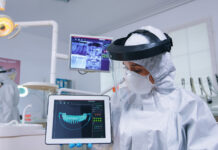











Invisalign has been hailed as the modern solution to malocclusion and misaligned teeth, giving patients a way to improve the positioning of teeth and unlock both functional and aesthetic benefits. Not only does Invisalign use a range of transparent aligners to help disguise the treatment, but these aligners are removable and convenient for eating, communicating, and cleaning.
Of course, as with any dental treatment, there are some eligibility criteria to meet before treatment can commence, with dentists also taking time to explain the costs and other considerations ahead of confirmation. Attending a pre-Invisalign consultation is an integral part of the process, covering results mapping and a full outline of what the patient needs to do to ensure good results.
In this short explanation of Invisalign and how it works, we unlock the truth of teeth alignment and how Invisalign differs from fixed braces.
Is Invisalign Really Invisible?
The name ‘Invisalign’ derives from the design and build of the aligners used throughout the treatment. Built to be transparent, these aligners sit tight against the teeth, countering the visible metal boxes and the wire which is set on the surface of the teeth for traditional brace work.
While not 100% invisible, these aligners are made from a clear plastic which gradually pushes the teeth into position, before moving onto the next aligner in the set.
Does Invisalign Hurt?
The aligners used for Invisalign treatment are created to sit tightly against the teeth, and so there is some degree of discomfort that patients should expect at the start of each new round. However, this is not painful and should disappear as the teeth settle into the new aligner.
Does Invisalign Actually Work Long-Term?
One of the biggest misconceptions about Invisalign is that patients wear the aligners on a long-term basis to ensure lasting results.
Invisalign packages vary in length and are tailored to the patient’s individual needs. Some find that their teeth swiftly move into a more aligned position, while others require several months of gradual movement before they are happy with the results.
All of this can be anticipated and monitored using sophisticated 5D mapping, which enables dentists to see how the teeth could shift and move throughout the course of treatment. Patients are informed of the projected duration of treatment and the likely results ahead of starting their Invisalign journey, so they can understand how long it will take and how their smile will be transformed by the end of treatment.
While a long-term retainer is provided to keep the teeth in their end position, Invisalign is not a lifelong journey. Rather, it works like a traditional fixed brace in aligning the teeth, with the retainer then helping to keep the teeth in that new position.
For more information on Invisalign, package prices, and to discuss your own FAQs, get in touch with your dentist today.